


AI that understands your business. Humans who decide. Plans that work.
Planning that moves at machine speed with the judgment only humans can provide.
Anyone can rent fluency. No one can rent understanding.
Today, any company can connect to an LLM in minutes and get what everyone else has: conversational fluency. A generic model is trained on public data, not on your business. It summarizes, writes, and answers very well. But it doesn't reason about your supply chain, your constraints, or your business rules: it predicts words, not consequences.
A Corporate World Model is something else entirely: it is a digital understanding of your business—not just what happened, but how it works, why results occur, and what is likely to happen under different decisions.

Adaptive
Continuously learns from new data, reflecting current reality.

Probabilistic
Generate outcome ranges and confidence levels.
Causal
Understand why results happen.
Action-oriented
Simulate "what-if" scenarios before you make a decision.

The mechanism, step by step
Pyplan's Decision Intelligence Framework connects every business question to the Corporate World Model and closes the loop with the Augmented Loop, which refines the model with every actual result.



A concrete example
A drought shuts down the Panama Canal. You have 48 hours to react. A key route is interrupted. The same situation, presented to a generic LLM and a Corporate World Model:
A generic LLM says
Summarizes news about the drought · answers general questions about routes · drafts a statement to customers · provides historical context on similar events.
Explains the situation. Does not solve it.
A Corporate World Model simulates
Impact on stock in Europe — 3 weeks lead time, USD 2.3M exposure · cascading reaction of fuel costs on freight · alternative routes ranked by cost + service · automatic replanning of affected SKUs.
Anticipate. Simulate. Recommend. Act.
How Pyplan is built
Pyplan is AI-native: it is not a legacy platform with AI bolted on. It was born from a model of how the business functions, which is now the Corporate World Model. Data feeds it, agents use it to simulate, and people make the decisions.
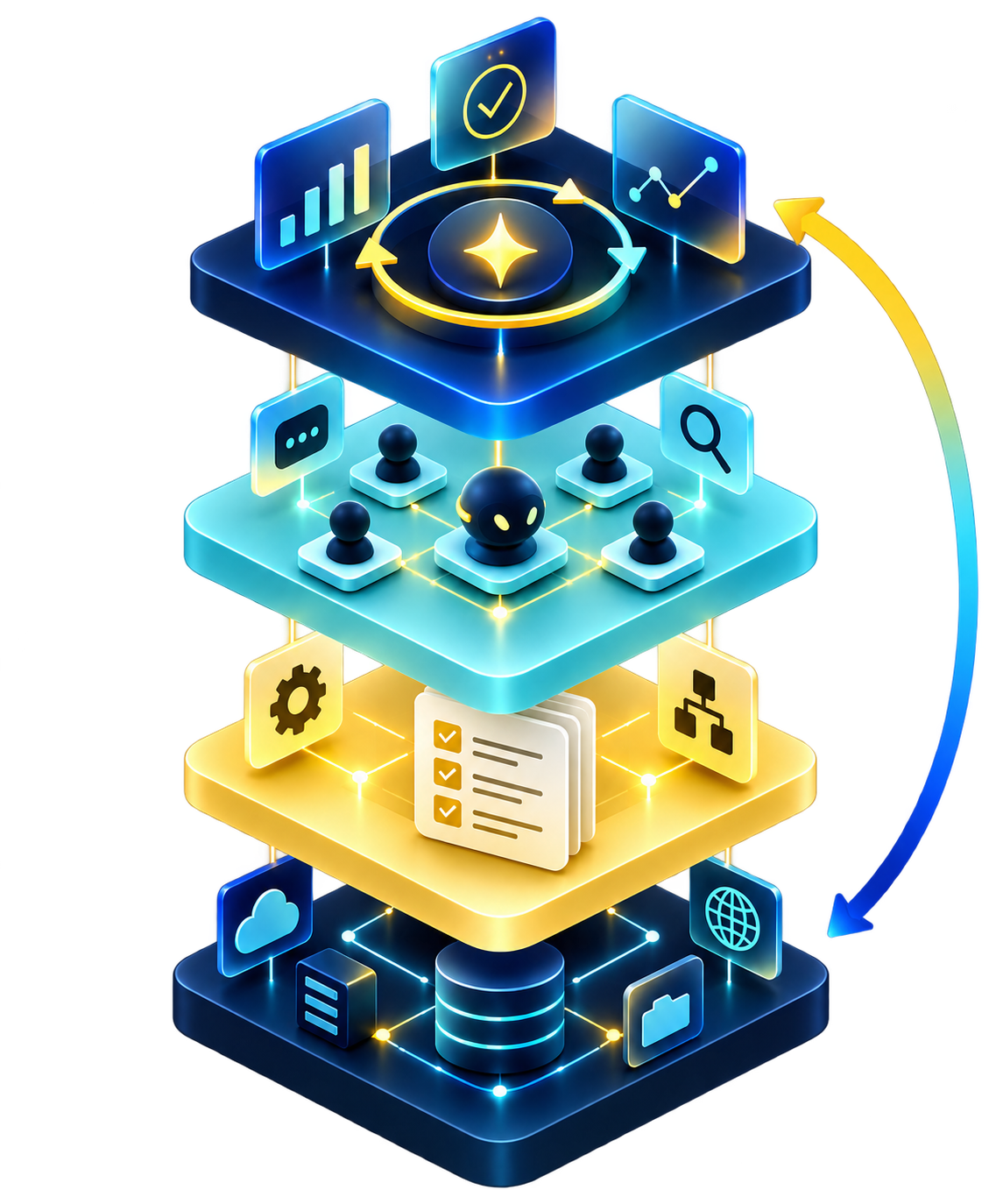
Data Foundation
Transactional, operational, financial, and external data, accessible from a single place with consistent semantics.
Corporate World Model
The competitive moat. It represents the business in three parts: state, dynamics, and action space. Rules become auditable and versionable code.
AI agents
They use the model as a simulator: evaluating scenarios and trade-offs, proposing and executing within defined parameters. The LLM is the interface.
Human decisions
Planners, analysts, and executives define objectives, validate, and decide. Every result feeds back into the model.
AI in action, results that speak for themselves

Nestlé breaks the traditional model and adopts planning that thinks, predicts and decides on its own
Nestlé transformed its planning with a digital flow of DRP, demand sensing and automation that increased accuracy, agility and product availability.
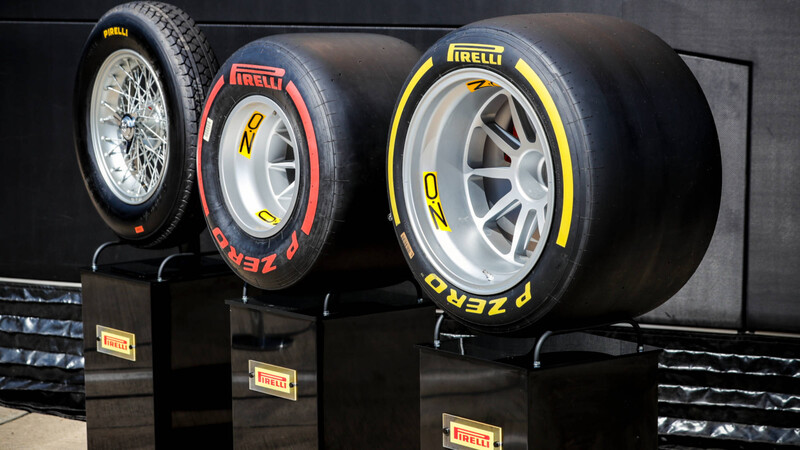
Pirelli is driving a new financial era with an agile, integrated model ready to scale
Pirelli transformed its financial planning by replacing manual processes with an integrated, agile model with instant visibility.

Coty redefines its planning: from fragmented processes to decisions with real business impact
Coty transformed its S&OP by integrating demand, supply and finance into a single model, improving decisions and efficiency.
Learn more about Pyplan
This section answers the most frequently asked questions about Pyplan, how it works, and its capabilities.
How is Pyplan's AI different from the AI we already tried that didn't work?
Most planning AI fails for the same reason: it is a black box bolted onto an existing system. Pyplan is AI-native; AI is integrated into every layer of the Corporate World Model, not added on top. More importantly, every recommendation includes the logic, assumptions, and business impact. If your planners cannot explain why the AI made a decision, they won't trust it. We make that impossible to ignore.
What exactly is the “Corporate World Model”?
It is the living representation of how your business operates: your data (Data Foundation), your coded and versioned business rules and constraints (Business Rules Layer), and the agents that reason over that model to simulate scenarios and recommend actions. This is not a new idea for Pyplan; it is the architecture upon which the platform was built from day one.
Will AI replace our planners?
That is by design. Pyplan’s AI excels at what machines do best: large-scale monitoring, anomaly detection, running thousands of scenarios, and automating routine decisions. Planners retain what only humans do well: exercising judgment on edge cases, aligning different departments, and taking responsibility for the final decision. The result is a faster, better-informed team, not a smaller one.
How do I know I can trust the AI's recommendations?
Don't just take our word for it: every recommendation comes with the data that drove it, the logic applied to the Corporate World Model, and the projected business impact. Planners can challenge any assumption, override any input, and immediately see how that change ripples through the plan. Trust is earned through transparency, not marketing promises.
Does Pyplan use our data to train its AI models?
No. Your business data remains yours. Pyplan models are trained using planning logic and domain knowledge, not your proprietary operational data. Each client's data is kept separate and confidential, and is never used to train or improve our models.
What happens when the AI gets it wrong or the context changes?
That is why the human-in-the-loop approach is a design principle, not just a feature. Planners can override any AI input at any time and see the impact instantly. When conditions change—a tariff, a supply chain disruption, a spike in demand—your team adjusts the assumptions and the Augmented Loop corrects the Corporate World Model. The AI doesn't make the final decision: your team does.
How long does it take to implement and see results?
Pyplan is designed for a fast time-to-value. Because it is built on the open Python ecosystem and integrates with existing data sources, implementation is measured in weeks, not months. Clients like Nestlé and Coca-Cola were running AI-assisted planning cycles within their first quarter, with measurable automation rates and planner adoption from day one.
Put Pyplan's Corporate World Model to the test in your operations
The fastest way to understand what it's like to plan with your own Corporate World Model is to see it with your own data and your own decisions. Request a demo and we'll show you exactly how Pyplan works: no black boxes, no generic slide decks.



The mechanism, step by step
Pyplan's Decision Intelligence Framework connects every business question to the Corporate World Model and closes the loop with the Augmented Loop, which refines the model with every actual result.